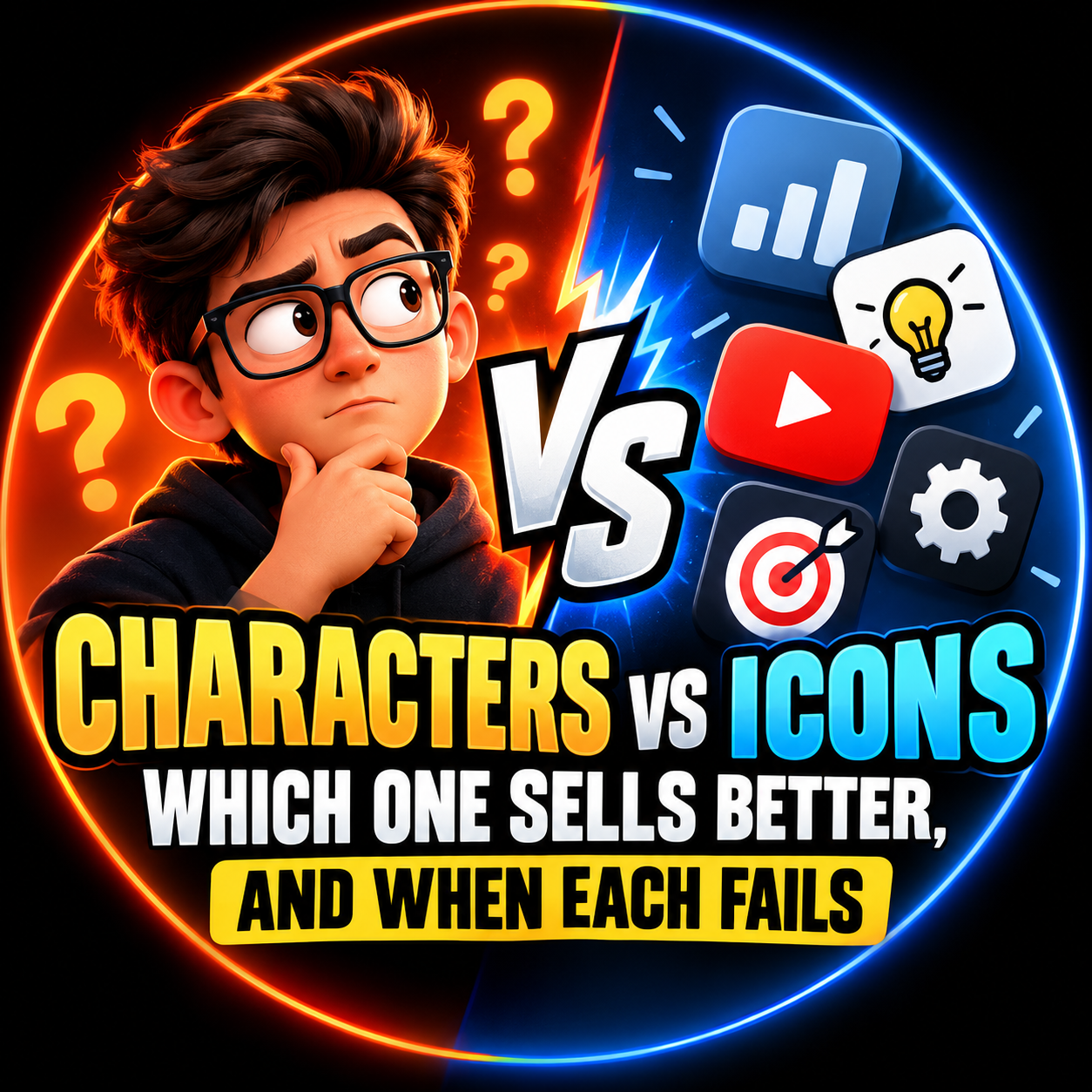
In the world of animated explainer videos, every visual element has a purpose. From expressive characters to minimalistic icons, animation helps brands simplify complex messages and connect with audiences. But when it comes to conversions, a common question arises: Do characters sell better than icons?
The answer depends on your audience, product, and marketing goals. Both visual styles can influence buying decisions, but understanding when to use them is essential for effective video marketing.
The Power of Character Animation
Character animation brings personality, emotion, and storytelling into marketing videos. By showing relatable people experiencing real-world problems, businesses can create stronger emotional connections with viewers.
For example, a healthcare company might use an animated doctor struggling with administrative work before introducing its software solution. This approach helps viewers recognize their challenges and understand the product’s value.
Why characters work:
- Create emotional connections with audiences.
- Make storytelling more engaging and memorable.
- Humanize brands and complicated services.
- Demonstrate customer problems and solutions.
Character animation is particularly effective for healthcare, education, financial services, and consumer-focused brands.
When Character Animation Fails
Characters aren’t always the best choice. Poorly designed characters, exaggerated expressions, or unnecessary movements can distract viewers from the actual message.
For technical products such as cybersecurity platforms or enterprise software, excessive character animation may also make the presentation feel less professional.
The biggest mistake is prioritizing entertainment over communication. If viewers remember the character but forget the product, the animation hasn’t achieved its marketing objective.
The Power of Icon-Based Animation
Icon animation focuses on simplicity, clarity, and visual efficiency. Instead of showing detailed characters, it uses symbols, illustrations, and motion graphics to communicate information quickly.
For example, a SaaS company explaining workflow automation can use animated dashboards, arrows, charts, and icons to demonstrate how its platform saves time.
Why icons work:
- Explain complex processes efficiently.
- Keep videos clean and professional.
- Support fast-paced product demonstrations.
- Highlight features, statistics, and benefits.
Icon-based animation works especially well for B2B marketing, technology companies, financial platforms, and corporate presentations.
When Icon Animation Fails
Although icons simplify communication, relying on them excessively can make videos feel generic.
When every scene contains similar symbols, arrows, and transitions, audiences may struggle to develop an emotional connection with the message.
Icons can also fail when businesses try to explain personal experiences, customer struggles, or emotional transformations.
A heart symbol may represent care, but an animated patient interacting with a doctor can communicate that feeling more naturally.
Characters vs Icons: Which Converts Better?
Neither animation style guarantees higher conversions. The effectiveness depends on how well the visuals support the message.
Choose characters when your goal is emotional storytelling, brand awareness, or demonstrating relatable customer problems.
Choose icons when explaining technical features, business processes, data, or complicated workflows.
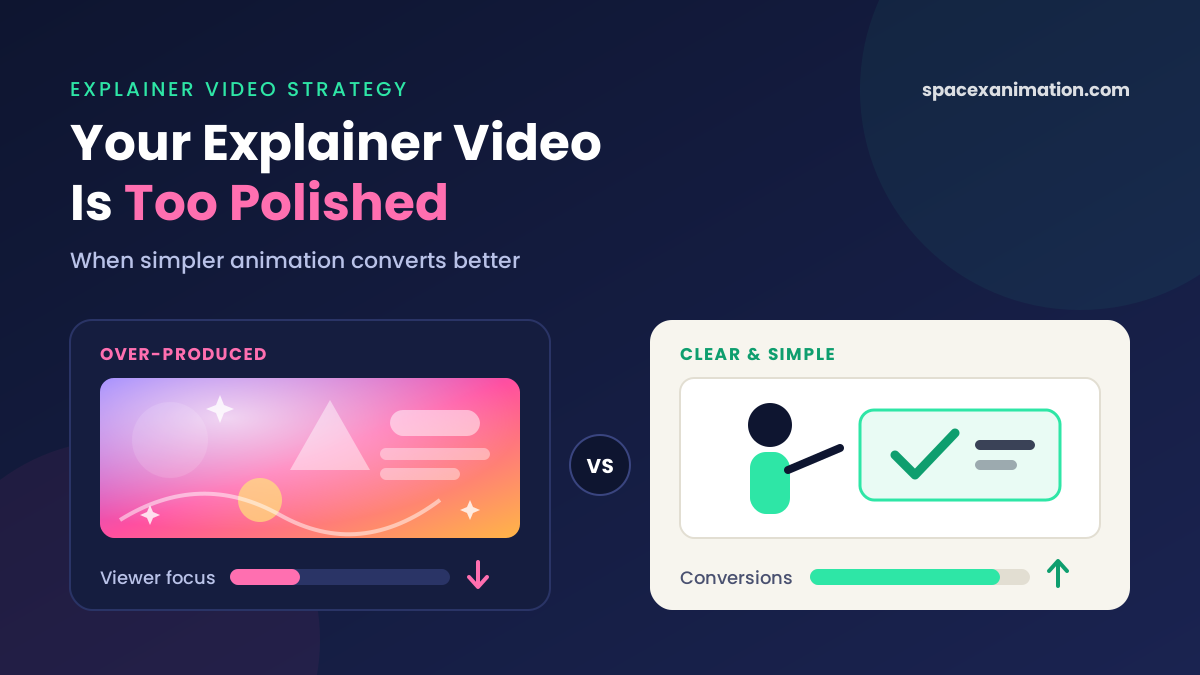
For many brands, combining both styles delivers a balanced approach. Characters establish the problem, while icons and motion graphics explain the solution.
Final Thoughts
Successful animation isn’t about choosing the most attractive visual style. It’s about choosing visuals that communicate your message clearly and encourage action.
At SpaceX Animation, we believe effective explainer videos balance creativity, storytelling, and strategic communication.
Whether you choose expressive characters, clean icons, or a combination of both, the goal remains the same: turn complex ideas into compelling visual stories that help businesses connect, engage, and convert.